

Putting all the pieces together in Traumatic Brain Injury
Whether it’s a sports-related concussion or a motor accident, traumatic brain injury rehab requires skill, awareness, consistency, patience, and a strong team. Let Homestretch take you through the journey to recovery.
Our Keys for Traumatic Brain Injury Recovery
Reset and Rewire
A TBI doesn’t stop the brain from learning We teach you the best strategies for your brain to not only rest and reset from the injury, but to rewire itself using neuroplasticity and meaningful exercises.
Manage All the Pieces
Weakness, spasticity, balance problems, dizziness, impaired focused, cognitive fatigue - so many pieces go into brain injury recovery. Whether it’s a concussion or a severe injury, it’s about finding the pieces that still connect and looking for new ones to try.
Structured Return to Function
Returning to work or sport after a brain injury can be intimidating. We take the guesswork out of it with structured, progressive protocols. We find the exact threshold where your brain can work without crashing, and then systematically raise it over time.
Understanding Traumatic Brain Injury
-
A traumatic brain injury (TBI) occurs when a sudden impact or jolt disrupts normal brain function. Depending on the severity and location of the injury, TBI can affect movement, balance, coordination, strength, cognition, and sensory processing — often in ways that are invisible to others but profoundly disruptive to daily life
Mild injuries — including concussion — can produce lingering symptoms that interfere with work, activity, and quality of life. Moderate to severe TBI may result in significant physical and cognitive deficits that require intensive, long-term rehabilitation.
-
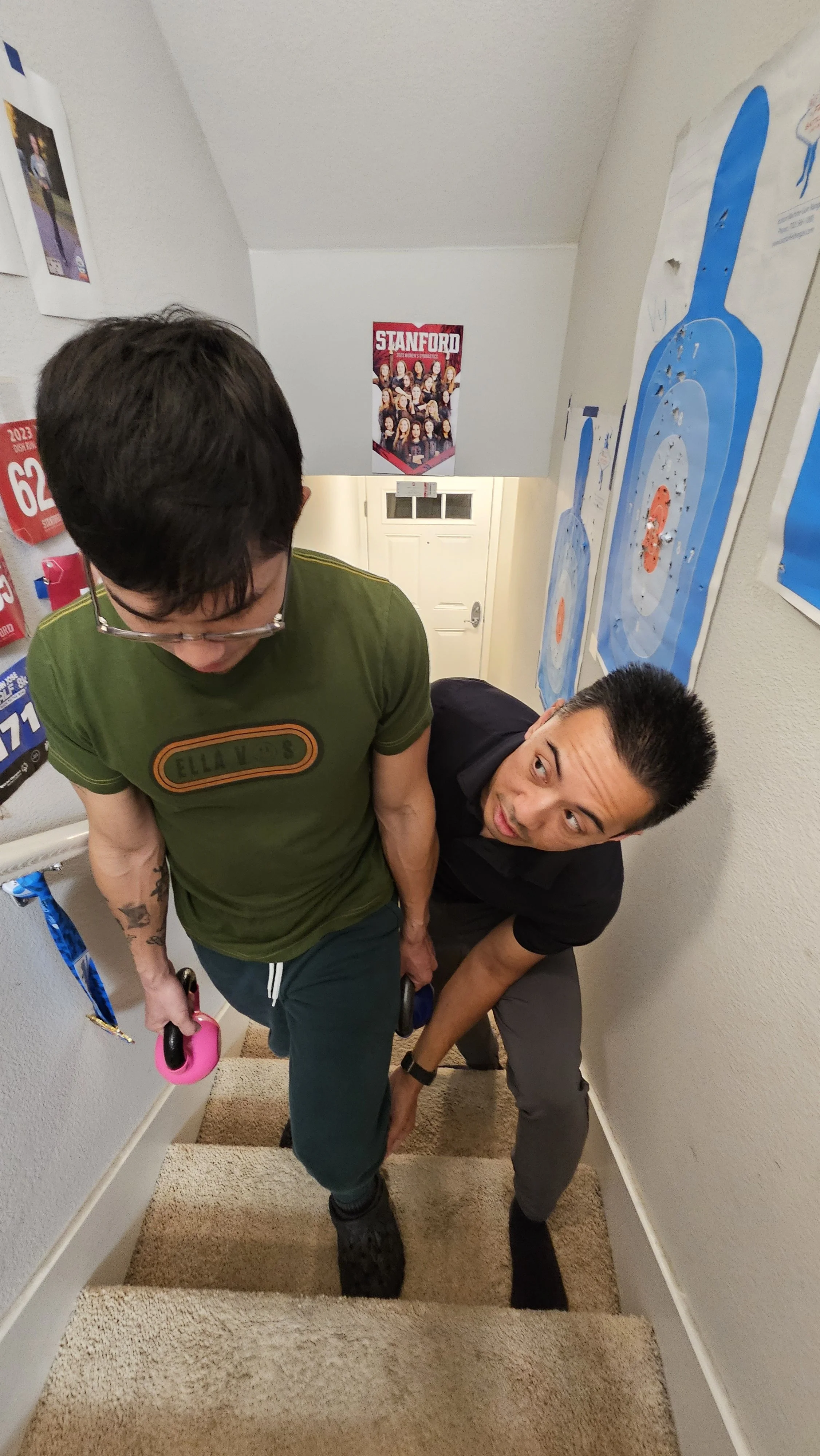
A TBI can leave lingering problems, but physical therapy can provide a solution. Using neuroplasticity-based movement training, vestibular rehabilitation, and sensory habituation, we can retrain the brain to restore movement and get back into the world.
-
There can be many different symptoms after a TBI. What we commonly help with are:
Balance problems and dizziness
Difficulty in crowded or busy environments
Weakness on one or both sides
Fatigue with physical or mental effort
Trouble returning to work or sport
Reduced coordination and reaction time


What Families Often Ask
-
Not at all. While early intervention is beneficial, meaningful recovery from TBI continues well beyond the acute phase. Many clients see significant progress months or even years after injury when they receive the right type of specialized care. If something still isn't right, it's worth addressing.
-
Yes. Persistent post-concussion syndrome (PCS) can lead to dizziness, balance problems, headaches, and sensitivity to movement. These are among the most treatable conditions in neurological PT. Vestibular rehabilitation and carefully dosed exercise have strong evidence for success in recovery.
-
Yes! Sensitivity to movement, busy environments, and visual stimulation is a hallmark of TBI recovery — and one of the most isolating parts of the experience. Through vestibular rehabilitation and gradual, structured exposure to triggering environments, we can systematically desensitize the nervous system and expand what you're able to tolerate.
-
That fear is one of the most common things we hear after TBI. The problem is that avoidance, while it feels protective, often prolongs recovery. Return to exercise and work isn't a leap — it's a series of deliberate, manageable steps. We map those steps out with you so nothing feels like a gamble.
-
Getting started is simple. Reach out through our contact form or schedule a call—we’ll walk you through the next steps and answer any questions along the way.